 Sportbet.one
  EveryGame
  Bovada
  MyNitro
  Betcoin.ag
  BetUS
BetUS 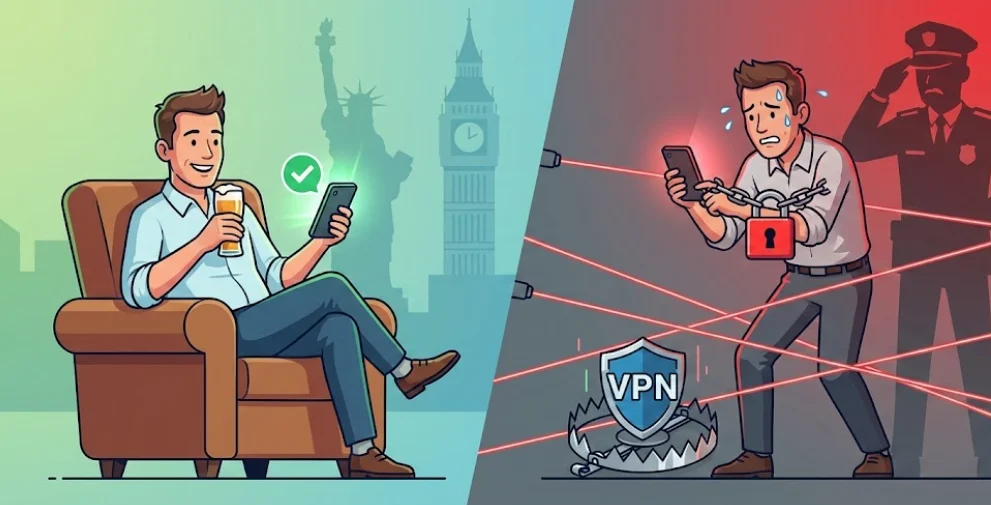
You are sitting on your couch, phone in hand, thumb hovering over the "Place Bet" button. It is a Tuesday night, and you have a gut feeling the home underdog is going to cover the spread in the fourth quarter. It feels harmless. It feels routine. But depending on the exact GPS coordinates of that couch, tapping that screen could technically be a criminal act.
Relax. If you are reading this from a licensed jurisdiction like New Jersey, Ontario, or the UK, nobody is kicking down your door. But for the everyday punter trying to find an edge, the line between a recreational hobby and a legal nightmare is remarkably thin. The sports betting landscape is a patchwork quilt of regulations. It is time to stop playing legal roulette and understand the board.
The Geography of Jail Time
First, let us burst the bubble of safety. In the Western world, we are spoiled. We tend to view betting bans as annoying regulatory hurdles to jump over. However, in places like the UAE, Qatar, Singapore, and various parts of Southeast Asia, gambling is not just a violation of some corporate terms of service. It is a strict criminal offense.
Tourists and traveling businesspeople are the most common victims of this ignorance. You might assume your DraftKings or bet365 account travels neatly in your pocket. It does not. Opening your favorite sportsbook app while on a layover in Dubai is not a simple technical error. It can be flagged locally as illegal internet activity. The penalties in strict jurisdictions range from prompt deportation to actual jail time.
Smart Play: Treat your betting app like a restricted item when you travel. Check the local laws before you even connect to the hotel Wi-Fi. A two-week holiday in a strict nation is a great time for a betting tolerance break, rather than an opportunity to test foreign cyber-police.
The Grey Market and the Accidental Money Launderer
Perhaps you are not betting from Qatar. You are sitting at home in an unregulated state, using an "offshore" bookie because they offer slightly reduced juice or flashy crypto deposit bonuses.
Here is the cold reality. While simply playing on these offshore sites is rarely prosecuted at the individual level in places like the US or Canada, you are willingly stripping yourself of all legal protection. When you bet with a regulated online bookmakers, the local gaming commission acts as the referee. If the house refuses to pay, you can file a complaint. When you bet offshore, you are playing streetball. If a shady operator decides to grade your winning +800 parlay as a loss or simply locks your account, you have absolutely zero recourse.
Furthermore, funding these offshore accounts often requires jumping through hoops. You might use crypto transfers, obscure third party payment processors, or deliberately miscoded credit card transactions. In the eyes of modern financial regulators, firing consistent transfers to unregulated entities located in known tax havens looks exactly like money laundering. You probably will not go to prison for placing a $50 wager on the Lakers, but you might find your bank account frozen and your credit flagged while a banking algorithm decides if you are an international kingpin or just a degenerate gambler.
The VPN Trap: A False Sense of Security
"I will just use a VPN," you say, confidently. "I will set my location to London and bet from anywhere."
This is the single most dangerous misconception in modern sports betting. Yes, a cheap VPN can fool a streaming service into showing you a different catalog of movies. No, it cannot fool a multi-billion dollar sportsbook's fraud and compliance department.
Regulated sportsbooks use sophisticated geolocation software, such as GeoComply, that goes miles beyond checking your IP address. They analyze triangulation data, surrounding Wi-Fi networks, cellular towers, and underlying device software. If they catch you spoofing your location to bet from an illegal jurisdiction, they do not just politely ban you. They confiscate your entire balance.
Imagine hitting a massive 10-leg parlay for $15,000, only to have the payout voided and your account locked because the fraud team detected your VPN signature. That is not a bad beat. That is a voluntary donation to the house. Using a VPN to bypass state lines also creates a permanent digital paper trail of your intent to circumvent the law.
The Sharp Punter’s Checklist
Sports betting is ultimately a game of edges. You look for value in the lines, you manage your bankroll with discipline, and you try to beat the bookie. Do not give the house a free edge by ignoring the legal realities of your location.
-
Know Your Jurisdiction: If you are in Utah, betting is strictly illegal. If you are in New York, it is legal and protected on licensed apps. Know the difference before you deposit.
-
Avoid the Offshore Trap: Getting an extra half-point on the spread is not worth the risk of frozen funds or banking alerts. Stick to regulated operators where your money is legally protected.
-
Respect International Borders: When you travel abroad, respect the local laws... The NFL will still be there when you get back home.
Betting should be sharp, entertaining, and profitable. It should never require a defense attorney. Keep your nose clean, keep your head in the game, and keep your wagers legal.