 Sportbet.one
  EveryGame
  Bovada
  MyNitro
  Betcoin.ag
  BetUS
BetUS 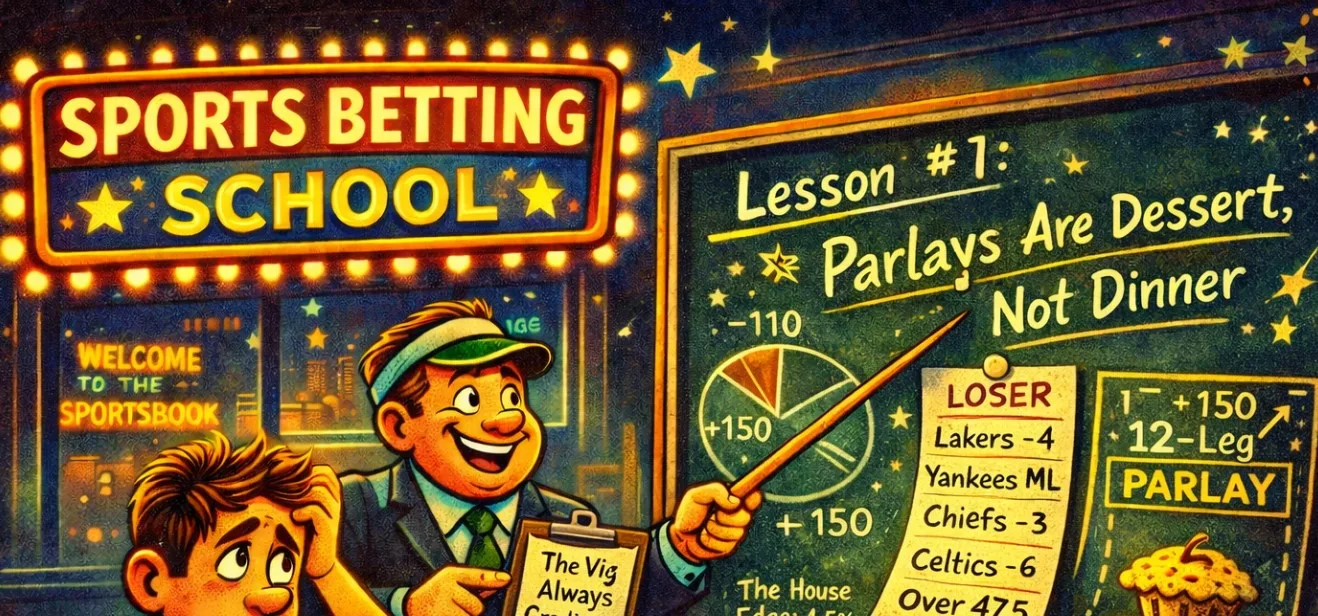
Let me guess how this started. You were scrolling through social media when a guy who looks suspiciously like he still owes his roommate three months of rent posted a screenshot of a ridiculous 12-leg parlay that just cashed. The ticket paid five thousand dollars. The caption read something inspirational like “easy money” or “just another day at the office.” Suddenly your brain did the thing all human brains do when easy money appears on the internet. It whispered a dangerous little sentence: how hard could this be?
Before you open a sportsbook account and start designing parlays that resemble a NASA launch checklist, it helps to understand something about sports betting that rarely appears in those screenshots. The reality is much less glamorous and much more interesting. Sports betting is not a lottery and it is definitely not a shortcut to early retirement. It is a marketplace built on probabilities, pricing, and discipline. The sportsbooks sponsoring your favorite leagues are not doing it because they enjoy giving money away. They do it because the average bettor treats a sportsbook like a slot machine with team logos.
If you want to last more than a few weekends as a punter, the first adjustment is mental. You have to stop thinking like a fan and start thinking like someone managing a small investment account that just happens to revolve around sports. That shift alone separates the casual bettors who redeposit every Sunday from the players who actually survive long enough to learn what they are doing.
Bankroll Management: The Skill That Keeps You Alive
The most important concept you will encounter has nothing to do with teams, statistics, or inside information. It is bankroll management, which sounds boring until you realize it is the only reason some bettors stay alive while others disappear within a month. Your bankroll is simply the pool of money you have set aside strictly for betting. It is not rent money, it is not grocery money, and it is definitely not the cash you planned to use for your friend’s wedding gift. It is money that exists purely for betting entertainment.
Once you establish that number, every bet you place should represent only a tiny slice of that total. Most experienced bettors operate somewhere between one and five percent of their bankroll per wager. If your betting bankroll is five hundred dollars, your typical bet should land somewhere between five and twenty-five dollars. That sounds painfully small compared to the giant wagers you see online, but those modest bets serve a crucial purpose. They protect you from the thing every bettor eventually experiences, which is a losing streak that arrives out of nowhere and stays longer than you would like.
Betting small portions of your bankroll means a rough week feels annoying rather than catastrophic. Betting half your balance on a “sure thing” means a rough week ends with you staring at a zero balance and wondering how table tennis suddenly became the most important sport on earth.
Understanding the Vig and Why Sportsbooks Always Get Paid
Once you grasp bankroll discipline, the next concept worth understanding is the quiet tax sportsbooks charge for every bet. This tax is called the vig, or the juice, and it explains why sportsbooks do not actually care who wins the game. If you look at most point spread bets, both sides are typically priced at minus one hundred and ten. That number means you must risk one hundred and ten dollars to win one hundred.
If two bettors take opposite sides of the same game, the sportsbook collects one hundred and ten from the loser, pays one hundred to the winner, and calmly keeps the ten dollar difference. Multiply that tiny edge across millions of bets and suddenly you understand how sportsbooks afford stadium naming rights and prime-time television ads.
Because of the vig, sports betting is not a fifty-fifty game. Many beginners assume that winning half their bets should keep them even, but the math disagrees. To break even over time, a bettor actually needs to win a little over fifty-two percent of their wagers. That might sound like a small difference, but it represents a real hurdle. The best professional bettors in the world often operate somewhere around fifty-five to fifty-eight percent over thousands of bets. Anyone advertising eighty percent winners is either confused, lying, or preparing to sell you something expensive.
Emotional Betting: The Fastest Way to Go Broke
Another lesson beginners learn the hard way involves emotional attachment. Fans love betting on their favorite teams because it feels natural. You are already watching the game and cheering anyway, so why not add a wager to make it more exciting?
The problem is that fandom quietly distorts judgment. When you support a team, you tend to remember their big victories and forget the sloppy defense or the injuries piling up on the roster. You convince yourself that this is the week everything finally clicks. Psychologists call this confirmation bias. Bettors call it the reason they keep losing money on their own team.
Ironically, many bettors perform better when they wager on games they do not emotionally care about. When you have no loyalty involved, the decision becomes purely analytical. You look at the numbers, the matchups, and the odds without your heart interfering with the math. The result is usually a calmer, more rational decision, which is exactly what sports betting requires.
The Parlay Trap That Sportsbooks Love
At some point early in your betting journey you will encounter the most seductive trap in the entire sportsbook ecosystem. It arrives dressed in bright colors, giant payouts, and promotional boosts. It is called the parlay, and sportsbooks absolutely adore it.
A parlay links multiple bets together into a single ticket where every selection must win for the bet to cash. If even one leg loses, the entire wager disappears. The reason parlays attract so much attention is obvious. A small bet can promise a massive payout. Ten dollars suddenly turns into hundreds or even thousands.
The problem is probability. Every additional leg multiplies the risk dramatically. Hitting one prediction is manageable. Hitting six or seven correct predictions in the same ticket becomes exponentially harder. Sportsbooks promote parlays so aggressively because they are incredibly profitable. Bettors see the dream payout and forget how unlikely the outcome actually is. That does not mean parlays should never be played. They can be entertaining and occasionally rewarding. The mistake happens when bettors treat them like their main strategy instead of an occasional gamble.
Why Smart Bettors Use Multiple Sportsbooks
Something else beginners overlook is how much odds can vary between sportsbooks. Many new bettors download a single app and stay there forever simply because they like the design or the welcome bonus. Meanwhile another sportsbook might be offering slightly better odds on the exact same game.
That difference might only be half a point or a few cents in price, but over the course of hundreds of bets those tiny edges matter. Serious bettors compare lines across multiple sportsbooks before placing a wager. It takes less than a minute and can quietly save a surprising amount of money over time.
In betting circles this is known as line shopping, and it is one of the easiest habits a bettor can develop. Loyalty might work in relationships, but in sports betting the best odds should always win.
Welcome to the Grind
When you put all of these pieces together, a pattern starts to emerge. Successful sports betting is not about miracle parlays or secret insider picks. It is about discipline, patience, and understanding how the market works. The real victory during your first betting season is not hitting one huge win. It is learning how to manage your bankroll, recognize value in odds, and avoid the traps that drain most players before they even realize what happened.
Sports betting is supposed to be entertaining. It makes games more intense and gives every late touchdown or last-second basket a little extra meaning. But if you approach it with patience and a bit of respect for the numbers, it can also become a fascinating strategic puzzle.
Stop chasing jackpots. Start playing the long game. Welcome to the grind.