 XBET
 BUSR
 Sportbet.one
 MyBookie
 EveryGame
 Bovada
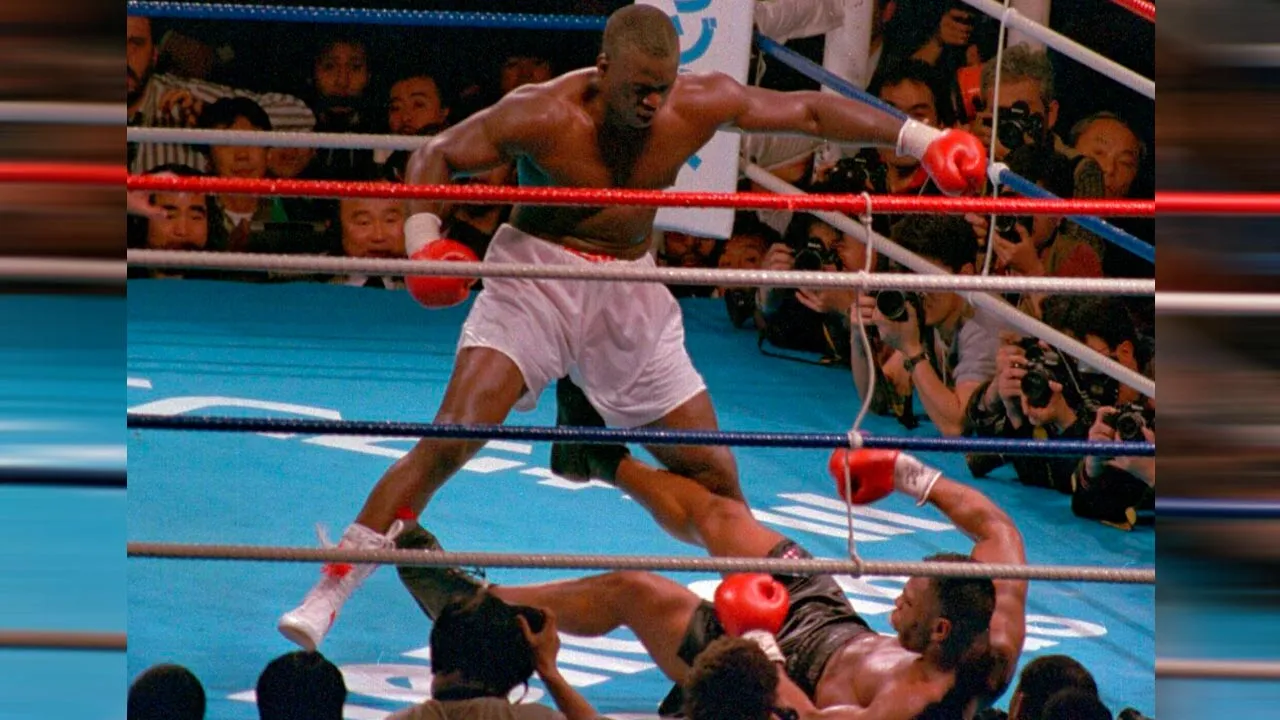
In February 1990, almost nobody in Las Vegas would take a bet on Mike Tyson's next fight. The heavyweight champion was 37-0, with 33 knockouts, and his opponent in Tokyo was a challenger from Columbus, Ohio, with four losses on his record. The fight looked so one-sided that most sportsbooks didn't bother to post a line.
One bookmaker did. That decision gave betting history its most famous number, 42-1, and the biggest upset in heavyweight boxing. This is the story of Buster Douglas vs Mike Tyson, the odds behind it, and what that night still teaches bettors.
Buster Douglas vs Mike Tyson: key facts
- Date and place: Feb 11, 1990, Tokyo Dome, Japan
- Records going in: Tyson 37-0 (33 KOs); Douglas 29-4-1
- The line: only the Mirage in Las Vegas posted odds; Tyson closed at 42-1 (-4200)
- Best price on Douglas: about 37-1, not 42-1
- Result: Douglas by knockout, round 10, at 1:23
The fight nobody wanted to book
By early 1990, Tyson wasn't just the champion. He was unbeaten in 37 fights, 33 of them by knockout. His opponent, James "Buster" Douglas, came in at 29-4-1, and almost nobody gave him a chance.
Most Las Vegas sportsbooks saw no point in posting odds. Who would bet on Douglas, and what would anyone gain from laying a fortune on Tyson? So the books stayed quiet, and the fight went to Japan without a board price at most windows in Nevada.
Jimmy Vaccaro takes the action
The exception was the sportsbook at the Mirage, run by Jimmy Vaccaro. As Wikipedia, ESPN and The Japan Times all record, the Mirage was the only Las Vegas book to put up a number. Vaccaro would later become one of the best-known oddsmakers in the city, and the fight became the subject of ESPN's "30 for 30" film titled "42 to 1."
According to accounts in the Las Vegas Review-Journal and USBets, Vaccaro opened Tyson at about 27-1 in early February. Then the Tyson money kept coming, and the price climbed: 35-1, then 37-1, and finally 42-1. In American odds, that last number is Tyson at -4200: risk $4,200 to win $100.
The 42-1 myth
Here's a detail that most retellings miss. "Douglas was a 42-1 underdog" is the line everyone repeats, but 42-1 was the price on Tyson as the favorite. Douglas, the underdog, was offered at about 37-1 at his best, according to Vaccaro's own accounts reported by USBets and the Review-Journal.
That gap isn't a typo. It's the bookmaker's margin. A book never offers the same number on both sides, because the difference between them is how it makes money. The headline number stuck, but anyone who actually bet on Douglas got 37-1 or less.
| Price | Who | American odds | Implied chance |
|---|---|---|---|
| Opening, ~27-1 | Tyson to win | -2700 | 96.43% |
| Peak, 42-1 | Tyson to win | -4200 | 97.67% |
| Best, ~37-1 | Douglas to win | +3700 | 2.63% |
Implied chances are our arithmetic from the reported prices.
Who was betting what
The money on Tyson came in big tickets. Vaccaro has described laying 42-1 on one large Tyson bet; accounts differ on the size, with one version putting it at $168,000 to win $4,000 and others at $420,000 to win $10,000. Either way, someone risked a fortune to win a comparatively small amount.
The Douglas money was the opposite: thousands of small tickets at $5, $10 and $20, according to Vaccaro's account to USBets. The biggest single Douglas bet he recalled was reported at between $1,000 and $1,500 at 37-1. At $1,500, that ticket paid $55,500 in profit.
Long-shot payouts are simple: at 37-1, every $10 wins $370 in profit. The hard part is the probability. At +3700, Douglas needed only a 2.63% chance of winning for the bet to be fair. If you thought he had even a 5% chance, the price was generous.
Tokyo, Feb 11, 1990
Douglas came to Tokyo carrying more than a game plan. His mother, Lula Pearl Douglas, had died of a stroke 23 days before the fight, at 46. One account records that he had promised her he would beat Tyson.
By most accounts, Douglas controlled much of the fight with his jab and kept landing on the champion. Round by round, it looked less like a mismatch and more like a real contest.
The eighth round and the long count
Then, late in the eighth, Tyson found what he had been hunting all night: a right uppercut that dropped Douglas to the canvas. Douglas got up at around the count of nine, just as the round ended. For a moment, the story seemed to snap back into its expected shape.
That knockdown became the most argued-over moment of the night. Tyson's camp would later claim the referee, Octavio Meyran, had given Douglas a "long count" of several extra seconds. HBO's replays were later used to argue the other way, and the debate has never fully settled.
Round ten
Douglas survived and kept fighting. In the tenth, he landed an uppercut and followed it with a combination that put Tyson on the canvas. Meyran counted him out at 1 minute, 23 seconds of the round, as ESPN records. James "Buster" Douglas was the undisputed heavyweight champion of the world.
Claim Bonus Now →
The aftermath: protests, belts and a short reign
Don King and Tyson's camp protested the result, arguing that Douglas should have been counted out in the eighth. The WBA and WBC initially suspended their recognition of Douglas as champion while they looked at the complaint; the IBF accepted the result straight away. Within a few days the WBA and WBC relented, and the result stood.
At the Mirage, the night ended well. Vaccaro later said the book's action had been balanced enough that it would have made a little on a Tyson win, and that it came out about $104,000 ahead when Douglas won, according to his account reported by USBets. The small tickets on the underdog paid out, but the big Tyson bets more than covered them.
Douglas's reign was short. In his first defense, on Oct 25, 1990, Evander Holyfield knocked him out in the third round. But the Tokyo result has never been forgotten, and the number 42-1 is still shorthand for the impossible upset.
What it teaches bettors today
1. A price is not a prediction
Tyson at -4200 didn't mean Tyson would win 97.67% of the time. It meant that was the price at which the Mirage was willing to take money, after seeing who was betting. Huge favorites are priced by demand as much as by skill. Whenever the price on a favorite looks too steep, ask whether the money is following the name rather than the matchup. Our guide to calculating vig shows how to convert a price into its implied probability.
2. Both sides of a line have different numbers
The "42-1 underdog" story survives because people quote the bigger number. In real betting you only ever get the price on your side. Check what you're actually being paid, not the headline figure.
3. The book doesn't need to know who wins
The Mirage would have profited either way. That's how bookmaking works: balance the money, keep the margin. If you think a book is beating you because it predicts results, it isn't. It's beating you on price, which is why shopping between books matters.
4. Long shots belong in small stakes
The bettors who cashed on Douglas mostly risked $5 to $20. That's the right way to play a long shot: a stake you can lose without a second thought. For a structured way to size bets, see our Kelly criterion guide.
5. Bets settle on the official result
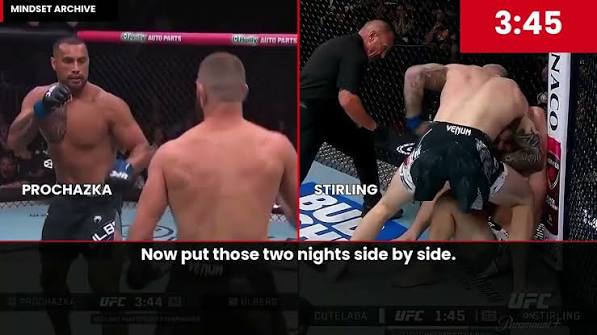
Tyson's camp protested for days, but bets are generally settled on the result announced when the fight ends, and later appeals don't change them. Fight house rules still differ by book, so read them before you bet; our UFC betting sites guide compares how each book handles disputed results, and our Procházka vs Stirling odds piece shows a modern underdog price in action.
The best underdog bets aren't about believing in miracles. They're about spotting when a market has priced a favorite on reputation rather than on the actual matchup. In Tokyo, the price was built on Tyson's aura, not on a close look at the matchup.
Bet the next big underdog
Boxing and MMA still produce long-shot results every year, and the prices on them vary a lot between books. MyBookie is our featured pick for fight betting, with Bovada and BUSR as second accounts for comparing prices. Check the promo page for current welcome offers.
Sources: The Japan Times, USBets, ESPN, The Washington Post (1990), the Las Vegas Review-Journal and Wikipedia.
The legal side
Offshore sportsbooks are not licensed by any US state, and your state's law decides whether you may use one. Sports betting is 21+ in most states, and gambling winnings are taxable. Our offshore sportsbooks guide has the details.
Bet only what you can afford to lose. If betting stops being fun, see our responsible gambling page, call 1-800-GAMBLER or visit ncpgambling.org.